Shouba Rou
Often translated as “hand-held” or “hand-grabbed” meat, shouba rou is commonly made with large pieces of lamb cooked in water with simple seasoning. It is served as a shared dish, allowing the flavor of the meat to remain central.
A small, carefully selected introduction to foods associated with Inner Mongolia and Mongolian food culture. Names, recipes and everyday habits differ from place to place.
Often translated as “hand-held” or “hand-grabbed” meat, shouba rou is commonly made with large pieces of lamb cooked in water with simple seasoning. It is served as a shared dish, allowing the flavor of the meat to remain central.
Roasted whole lamb is a festive dish associated with banquets and important gatherings. Preparation and presentation vary, and it is best understood as one celebratory example rather than an everyday meal for every household.
Milk tea is an important everyday drink in many Mongolian households. A common style combines brewed tea and milk, sometimes with salt. Some families add butter, roasted millet or other ingredients, so the taste is not identical everywhere.
Milk curd is a broad English description for firm or pressed dairy foods. Traditional dairy products can be made through different processes such as souring, separating, pressing and drying. Texture and taste depend on the milk and method used.
Fermented and cultured dairy foods are part of the wider food traditions of Mongolian communities. Products vary in thickness, sourness and preparation, and may be served fresh or processed for keeping.
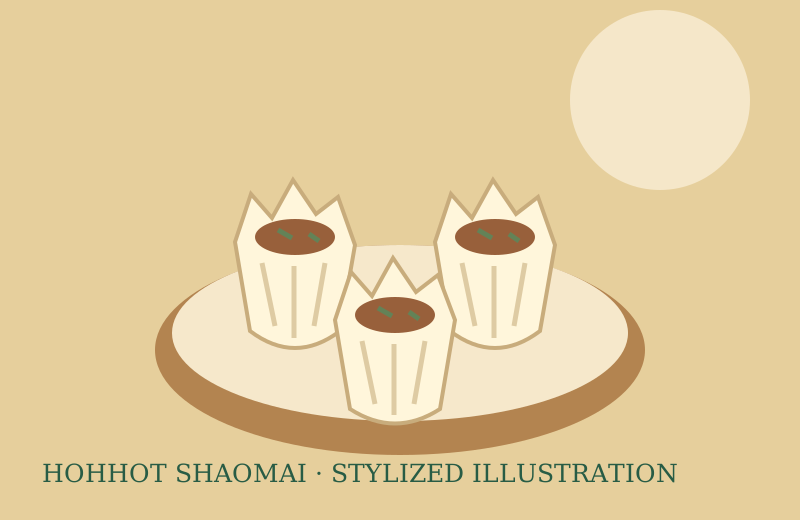
Shaomai is a well-known local specialty in Hohhot: an open-topped wheat wrapper filled with seasoned meat. It reflects the layered food culture of a regional city, where different communities and culinary traditions meet.